Bringing Digital Souls to Life: How Motion Capture Technology Reshapes Gaming Development
Beyond Pixels: The Human Heart of a Virtual Character
A character in a computer game can look stunning, draped in intricately textured armor, with eyes that catch virtual light. Yet the moment it moves—if the gait feels stiff, the gestures robotic, the emotional weight absent—the illusion shatters. Gaming development. Motion capture techn exists precisely to prevent that fracture. Motion capture technology, often abbreviated as mocap, records the nuanced movements of a human performer and translates them into a digital skeleton that animates a 3D model. This process has moved from a high-budget luxury reserved for triple-A studios to a tool accessible to independent creators, educators, and researchers alike. The result is a character that breathes, stumbles, celebrates, and grieves with authenticity that keyframe animation alone rarely achieves.
Understanding Motion Capture Technology: From Suits to Software
To grasp how mocap supports gaming development. Motion capture techn, it helps to understand the hardware and software ecosystem. Most modern systems fall into two categories: optical and inertial. Optical mocap relies on multiple cameras tracking reflective markers attached to a performer’s body. The cameras triangulate the markers’ positions in three-dimensional space, producing a precise point cloud. Inertial systems, by contrast, use sensors—gyroscopes, accelerometers, magnetometers—embedded in a suit. These sensors measure rotation and acceleration, and the data is fused to reconstruct body movement without external cameras. Both approaches output data that drives a digital character inside a game engine such as Unity or Unreal.
Yet raw data is rarely ready for immediate use. Cleaning, filtering, and retargeting the captured motion to a character rig is a critical step in the character design pipeline. A human performer’s skeleton differs from a fantasy creature’s proportions. A developers job includes mapping the captured hip rotation to a digitigrade leg structure, adjusting foot placement, and blending multiple takes to create seamless locomotion cycles. This is where technical artistry meets storytelling.
Optical Versus Inertial: Choosing the Right Capture Method
Optical systems offer sub-millimeter accuracy and are the gold standard for film and major game productions. However, they require a controlled studio environment, careful calibration, and significant post-processing. Inertial suits, worn by the performer like a second skin, can be used outdoors, on uneven terrain, or even in water. This flexibility makes them popular for independent gaming development teams and researchers studying movement in natural contexts. Consider a small studio building a computer game about parkour: an inertial suit allows the performer to run across a real rooftop, capturing the precise weight shift and arm swing that a purely hand-animated sequence would miss. The trade-off is a higher noise floor and occasional drift, but modern fusion algorithms have narrowed the gap considerably.
The Developers Job: Beyond Button Pressing
Many assume that a developers job in motion capture is purely technical—setting up cameras, recording takes, exporting FBX files. In practice, a game developer working with mocap must also be a director, an editor, and a psychologist. They guide the performer to deliver a performance that matches the game’s tone: the cautious step of a survivor in a horror game differs profoundly from the swagger of a street fighter. The developer decides which takes are usable, how to splice them, and when to augment captured motion with keyframe adjustments. This hybrid workflow, sometimes called “clean-up animation,” preserves the organic feel of human motion while fixing imperfections such as foot sliding or intersections with the environment.
Moreover, the developers job involves integrating the captured data into the game engine’s state machine. A character that transitions smoothly from walking to jogging to sprinting, with variations based on terrain slope and player input, requires blending multiple motion clips. Without careful tuning, the result looks floaty or robotic—the very problems mocap is meant to solve. So the developer becomes a choreographer of algorithms, tuning blend weights and transition windows until the virtual body responds with the same intuition as a living one.
Character Design in the Motion Capture Era
Character design has always been about silhouette, proportion, and color. Motion capture adds a fourth dimension: physical presence. A character designed purely as a visual artifact may look striking on a concept sheet but fail to move convincingly when animated. Modern character design practitioners think about range of motion, center of mass, and joint constraints from the earliest sketches. They ask: Does this character’s shoulder width allow a natural throwing motion? Can the spine flex enough to convey exhaustion? These considerations feed back into the modeling and rigging stages, creating a virtuous loop between art and performance.
When motion capture data is retargeted to a stylized or non-humanoid character—think a four-armed alien or a floating orb with tentacles—the character design must account for how the captured human motion will be reinterpreted. This often leads to hybrid approaches: using mocap for the core spine and root movement while layering procedural or keyframe animation for additional limbs. The result feels grounded in real human intention, even when the character looks entirely fantastical.
From Actor to Avatar: The Pipeline in Practice
- Pre-production: The developer and animator review the game script, identifying moments where mocap adds emotional depth—cutscenes, combat finishers, idle fidgets.
- Calibration and marker placement: The performer dons the suit or markers, and the system is calibrated to their body dimensions. A reference T-pose or A-pose is recorded.
- Performance capture: Multiple takes are recorded, often with simultaneous facial capture using a helmet-mounted camera. The developer monitors live previews inside the game engine.
- Data cleanup: Using software like MotionBuilder, Blender, or Maya, the developer removes noise, fills gaps, and adjusts joint orientations.
- Retargeting: The cleaned motion is mapped to the game character’s rig. Scaling and rotation offsets are applied to match the character’s proportions.
- Integration and iteration: The motion clips are imported into the game engine, blended into the animation state machine, and tested in actual gameplay. Feedback from playtesters often leads to re-recording or tweaking.
Each step requires both technical precision and artistic judgment. A developers job is never finished when the data is captured; it only transforms.
Applications Across the Gaming Landscape
While triple-A action games like “The Last of Us” or “God of War” famously rely on mocap to deliver cinematic performances, the technology has proliferated into unexpected corners of gaming development. Indie horror titles use minimal mocap to create unsettling, naturalistic movements that would be tedious to hand-animate. Educational simulations—virtual anatomy labs or historical reenactments—use captured motion to teach physical skills. Rehabilitation games, where patients perform guided exercises, benefit from motion libraries derived from therapists’ own movements. Even puzzle-platformers increasingly use subtle mocap for the player character’s breathing, head tilts, and hand gestures, building emotional connection without a single line of dialogue.
In the context of creating a computer game, motion capture technology also extends to props and environmental interaction. Picking up an object, pushing a door, climbing a ladder—these common actions are time-consuming to animate convincingly from scratch. A performer performing these actions naturally generates data that feels immediate and weighty. The difference between a canned, looping climb animation and a mocap-driven one is the difference between watching a puppet and watching a person.
Facial Capture: Micro-Expressions That Tell a Story
While body motion captures the broad strokes of performance, facial motion capture—often using a head-mounted camera or a separate array of small markers—translates a performer’s expressions onto a digital face. For gaming development. Motion capture techn, this is where the uncanny valley is either bridged or deepened. A character whose eyebrows rise a fraction of a second before the surprise line reads as authentic. A slight lip twitch conveys nervousness. Modern systems capture not just the large features but the subtle interplay of skin, muscle, and fat, mapping them onto blendshapes or advanced rigs. The developers job includes tuning the responsiveness of these facial controls so that the character appears present, not just reactive.
Vector Cartoon Flat Style and the Mocap Paradox
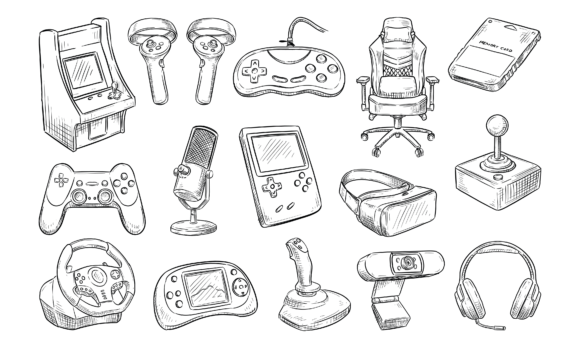
At first glance, vector cartoon flat style isolated illustration EPS, JPG might seem antithetical to motion capture. Flat characters, with their simplified anatomy and exaggerated proportions, do not require realistic movement to charm an audience. Yet many modern games blend both approaches: a flat, stylized world can still benefit from the nuanced timing of mocap. A cartoon character who slumps their shoulders, taps their foot, or shifts their weight impatiently feels more alive than one that bounces mechanically from pose to pose. The trick lies in abstraction—the developer filters the mocap data to retain only the essential arcs and accents, discarding the micro-movements that would look out of place in a flat aesthetic.
This hybrid workflow is especially useful for character design teams working on mobile or browser games, where file size and performance constraints demand efficient animation. By using mocap as a reference or a base layer, and then simplifying the curves in a vector-friendly format, developers achieve readability without sacrificing personality. The result is a vector cartoon flat style isolated illustration EPS, JPG that can be printed, shared, or used in promotional materials, alongside a game character that moves with surprising believability.
Considerations for Hobbyists and Independent Creators
The democratization of motion capture technology means that a hobbyist can now record a performance with a single webcam and open-source software like OpenPose or MediaPipe. Yet the gap between raw tracking and game-ready animation remains significant. A thoughtful gaming development process acknowledges that mocap is a tool, not a substitute for understanding weight, anticipation, and follow-through. A new developer might capture a jumping motion, only to find the character floats because the performer’s weight shift doesn’t match the game’s gravity scale. Learning to adjust the data—scaling acceleration, offsetting foot contacts, and adding a landing squash—is part of the craft.
For those using creating a computer game as a learning vehicle, mocap offers an accelerated path to expressive animation. It teaches timing and pose by doing. When a hobbyist sees their own walk cycle animate a digital character, they internalize the relationship between human biomechanics and virtual performance. This experiential knowledge is difficult to acquire through textbooks alone.
- Budget: Markerless systems (single camera, no suit) cost little but produce noisier data. Inertial suits start around a few thousand dollars; optical systems can exceed tens of thousands.
- Space: Optical requires a dedicated capture volume. Inertial and markerless work in smaller or unpredictable environments.
- Skill floor: Cleaning mocap data requires familiarity with animation software. Many free tutorials exist, but the initial learning curve is steep.
- Creative fit: Not every game needs realistic movement. Stylized, abstract, or non-humanoid characters may benefit more from keyframe or procedural animation.
Emerging Trends: Real-Time Mocap and Virtual Production
As game engines become more powerful, real-time motion capture is entering mainstream gaming development. Instead of recording, cleaning, and importing later, developers can stream mocap data directly into the engine and see the character animate instantly. This enables live performances for virtual reality, interactive theater, and streaming avatars. The developers job shifts from post-processing to live direction, adjusting filters and calibration on the fly. Meanwhile, virtual production pipelines—popularized by shows like “The Mandalorian”—use mocap to drive digital doubles in real-time environments, blurring the line between game development and filmmaking.
Researchers are also exploring machine learning to extrapolate full-body motion from sparse inputs, such as a single camera or even audio. While these methods are not yet production-ready for most gaming development. Motion capture techn workflows, they hint at a future where capturing performance becomes as simple as recording a video. For character designers, educators, and business owners looking to produce training simulations, the barrier to entry will continue to fall.
Practical Wisdom for Educators and Researchers
Educators teaching gaming development can use mocap to demonstrate principles of physics, anatomy, and storytelling in a single exercise. Students can explore how different walking styles—bouncy, shuffling, stride-heavy—convey personality without changing the character model. Researchers studying human-computer interaction often rely on mocap to quantify how users move through virtual spaces, informing interface design and accessibility features. In both contexts, the availability of motion capture technology as a reproducible tool accelerates discovery. A research team can capture the gait of elderly participants, analyze balance patterns, and implement those findings into a game designed for fall prevention. The same pipeline that animates a superhero can improve quality of life.
When documenting results or sharing findings, the ability to present a vector cartoon flat style isolated illustration EPS, JPG of the character alongside the motion data helps communicate abstract concepts to non-specialist audiences. A simple, clean diagram of marker placement or joint hierarchy is often more impactful than a cluttered screenshot of the animation timeline.
Closing Thoughts on the Art of Digital Performance
Motion capture technology has matured from a novelty into a cornerstone of modern gaming development. It does not replace the animator’s eye or the designer’s imagination; rather, it extends their reach, allowing them to sculpt motion from life itself. Whether the final output is a photorealistic epic or a vector cartoon flat style isolated illustration EPS, JPG, the common thread is a commitment to making digital characters feel present. The developers job is to humanize the algorithm, and mocap provides the raw material for that alchemy. As the tools continue to improve and the cost of entry declines, more creators will discover that the best way to teach a computer game character to move is to start by moving themselves.