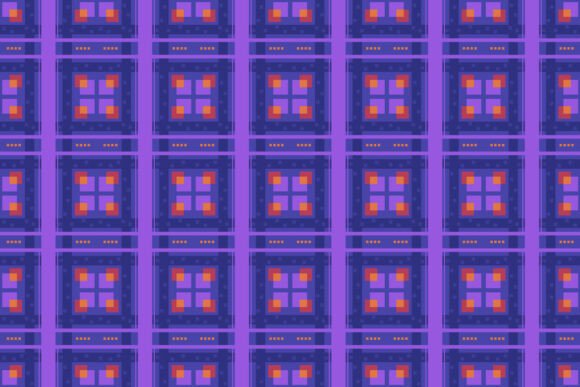
Pixel Retro Gaming Seamless Pattern – Bringing Nostalgic Arcade Vibes Into Modern Design
There’s something about the chunky squares, the limited color palettes, and the instant recognition of an 8-bit world that resonates deeply with anyone who grew up clutching a joystick or mashing buttons on a handheld console. The Pixel Retro Gaming Seamless Pattern captures that exact feeling—not as a mere throwback but as a versatile, functional design asset that works across countless modern projects. Whether you are building a website for a gaming café, designing packaging for a limited-edition snack, or crafting a full textile print for a streetwear drop, this pattern offers a bridge between the past and the present that feels both familiar and fresh.
Patterns like these have moved far beyond simple nostalgia bait. They now serve as practical tools for branding, digital interfaces, product design, and content creation. The key is understanding what makes them work, how to apply them effectively across different media, and where they can elevate your project without overwhelming it. Let’s walk through the qualities, uses, and practical decisions that come with choosing a Pixel Retro Gaming Seamless Pattern for your next design.
The Visual DNA of Retro Pixel Patterns
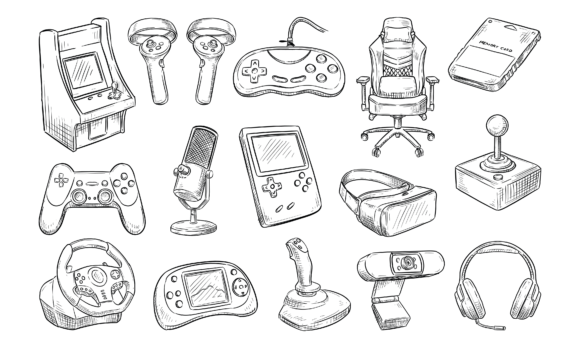
A pixel art pattern isn’t just a collection of random blocks. It’s a deliberate composition that uses the constraints of older hardware as a creative starting point. The Pixel Retro Gaming Seamless Pattern typically draws from the visual language of 8-bit and 16-bit games—tiles featuring iconic motifs like mushrooms, stars, hearts, coins, controllers, joysticks, cassette tapes, and pixelated characters. The grid structure is explicit, with sharp edges and no anti-aliasing, which gives every element a crisp, unmistakable silhouette.
Color selection plays a huge role. Early gaming consoles had strict limits on simultaneous on-screen colors (often 16 or 256), so designers leaned into high-contrast, saturated hues. Yellows pop against blues, bright reds stand out on dark backgrounds, and greens deliver that classic “overworld grass” feel. A well-crafted Pixel Retro Gaming Seamless Pattern respects these limitations while still feeling vibrant and energetic. The result is a texture that reads clearly at any scale—whether it’s a tiny background tile on a mobile screen or a large-format wall mural.
Seamless Tiling: More Than Just Repeating Squares
The word “seamless” often gets thrown around loosely, but in the context of this pattern, it means precise technical execution. Each tile must align perfectly on all four edges so that when you repeat it horizontally and vertically, there is no visible seam, no awkward break, and no misaligned pixel. This matters enormously for real-world use. If you’re printing wallpaper or wrapping an e-commerce site in a background texture, any visible seam destroys the illusion and cheapens the look.
Pixel Retro Gaming Seamless Pattern assets are typically built on a base tile size that divides cleanly—often 256px, 512px, or 1024px—and every element within the tile is carefully positioned so that overlapping motifs flow naturally across repeats. The best versions also include multiple tile variations or colorways so you can switch between moods without losing the underlying rhythm. A dark mode variant with neon accents, for example, gives you a night-time arcade feel, while a pastel version works for a softer, kid-friendly aesthetic.
Where the Pattern Shines in Modern Workflows
Designers, marketers, and content creators are using the Pixel Retro Gaming Seamless Pattern in ways that go far beyond simple wallpapers. The flexibility of a well-tiled pattern means it can be adapted to projects across print, digital, merchandise, and environmental design. Let’s explore some of the most effective applications.
Web and Interface Design
Retro pixel textures can serve as hero backgrounds for landing pages, section dividers in long-scroll sites, or subtle accent tiles behind navigation bars. Because the pattern is built on a strict grid, it complements modern UI frameworks that rely on responsive columns and flex layouts. You might use the pattern as a hero background for a gaming-related product launch, then fade it into a solid color as the user scrolls down. The contrast between the busy, playful pattern and clean, minimal typography creates a dynamic visual hierarchy.
For app interfaces, consider using a Pixel Retro Gaming Seamless Pattern inside modal windows, loading screens, or even as a subtle watermark behind profile avatars in a gaming community app. Because the pattern tiles endlessly, you never have to worry about edge-cases on different screen sizes. It scales naturally from a 320px mobile viewport to a 3840px ultrawide monitor.
Merchandise, Apparel, and Product Packaging
Streetwear brands and indie merchandise shops love retro pixel patterns because they carry cultural weight without being overly literal. A T-shirt with a small pixel pattern on the sleeve or a repeating all-over print instantly signals a connection to gaming culture. The same pattern works on stickers, enamel pins, phone cases, mouse pads, and canvas bags. The key is choosing a colorway that matches your brand palette. If your label uses earthy tones, a muted version of the pattern with browns, olives, and creams will feel cohesive rather than jarring.
Packaging designers are also weaving these patterns into product boxes and wrapping paper. A limited-edition cereal box with a pixel pattern background makes the product feel collectible. A subscription box for retro gaming accessories can use the pattern as the primary exterior print, with a solid color interior for contrast. The pattern’s seamless nature means you can wrap it around a cylindrical container or a box with zero alignment headaches.
Social Media and Digital Content
Content creators on YouTube, Twitch, TikTok, and Instagram are constantly looking for eye-catching backgrounds that don’t distract from the main subject. The Pixel Retro Gaming Seamless Pattern works perfectly as a video backdrop for talking-head segments or as an overlay behind chat boxes and stream alerts. Because the pattern is static (no animation needed unless you want it), it keeps bandwidth low and renders cleanly even at compressed bitrates.
For static social posts, the pattern can fill the background of quote cards, announcement graphics, or countdown timers. An easy approach is to overlay a semi-transparent gradient on top of the pattern to create a vignette effect that draws attention to the central text. This technique is used by major gaming brands to maintain a consistent visual identity across platforms without overcomplicating their asset pipeline.
Practical Considerations Before Downloading
Not all retro pixel patterns are created equal. Before you press start on your next design adventure, there are a few critical factors to evaluate so you end up with a file that actually works in your production environment.
- Resolution and scaling. Check the native dimensions of the tile. A pattern that looks crisp at 100% might become blurry if you scale it up beyond its intended size. Vector-based pixel patterns are ideal because they maintain sharp edges at any resolution, but if you’re working with a raster file, ensure it’s at 300 DPI for print and at least 1920px wide for digital backgrounds.
- Color space. If you’re designing for print, make sure the pattern is available in CMYK or that you can convert it without losing vibrancy. Some pixel art colors shift dramatically when converted from RGB to CMYK, so test a proof before committing to a large print run.
- Repeat flexibility. A single tile is fine, but having access to multiple tile variations or alternate color palettes gives you more creative control. Look for patterns that offer a dark theme, a light theme, and perhaps a monotone version for subtle applications.
- File formats. The most useful packages include PNG with transparency for digital overlays, SVG or AI for vector editing, and high-res JPEG for quick mockups. If you plan to edit the pattern, source files with layers are a major time-saver.
- Licensing. Always confirm whether the pattern is available for commercial use. Many high-quality assets on creative marketplaces come with standard licenses that cover personal and commercial projects, but read the fine print if you plan to use it on merchandise sold in large volumes or as part of a brand identity.
Matching the Pattern to Your Project’s Tone
A common mistake is assuming all retro pixel patterns evoke the same mood. A pattern loaded with power-ups, coins, and bright primary colors reads as energetic and playful—perfect for a kids’ gaming platform or a candy brand. On the other hand, a pattern using muted grays, dark blues, and subtle grid lines can feel nostalgic but sophisticated, suitable for a tech startup’s website or a premium vinyl record sleeve. The Pixel Retro Gaming Seamless Pattern you choose should align with the emotional tone you want your audience to feel. Don’t force a loud pattern into a minimalist brand—find a version that respects your existing visual language.
Practical Workflow: How to Integrate the Pattern
Once you have your Pixel Retro Gaming Seamless Pattern file, integrating it into a project is straightforward, but a few best practices can save you time and frustration. If you’re using Photoshop or Illustrator, place the pattern as a separate layer and use the built-in pattern overlay or fill features. This allows you to scale, rotate, or mask the pattern without altering the original file.
In web design, you can use CSS background-repeat with the tile URL. Setting the background-size to “auto” or a specific pixel value preserves the crispness of the pixel art. Combine it with background-blend-mode for creative effects—multiply mode works well for dark backgrounds, while screen mode gives a neon glow effect over dark gradients.
For print projects, import the pattern into InDesign or Affinity Publisher as a linked image and use the “tile” option in the fill dialog. Always overprint the pattern if your project uses multiple spot colors, and check the output in a soft-proof view to catch any unexpected shifts in brightness.
Why Designers Keep Coming Back to Retro Pixels
Trends come and go, but pixel art has shown remarkable staying power. Part of the appeal is psychological: the human brain enjoys the clarity and order of a grid-based pattern. The predictability of the tile feels satisfying, while the playful motifs inject personality without requiring realism. But there is also a practical reason—the Pixel Retro Gaming Seamless Pattern is incredibly efficient. It renders quickly on all devices, prints sharply at any size, and communicates a cultural reference almost instantly. It does not need color gradients, complex shading, or high-resolution photography to be effective. It just works.
From indie game studios to global fashion retailers, from solo streamers to packaging designers, the pixel pattern continues to prove that constraint breeds creativity. By adopting a pattern that honors the look and feel of early gaming, you tap into a shared cultural memory while also gaining a flexible, scalable, and memorable design tool. Whether you use it as a subtle accent or the main visual theme, the result is always distinct.
If you are ready to bring that arcade energy into your next project, take a moment to browse a well-constructed Pixel Retro Gaming Seamless Pattern. Check the tile quality, experiment with color overlays, and imagine how it will look at full scale. With the right pattern in hand, you can press start on a design that resonates with nostalgia while feeling completely current.